
Coffee tastes sour, dry, hollow, or muddy? Change one thing.
A taste-led troubleshooting guide for home coffee: identify what the cup is doing, make one useful adjustment, and stop changing everything at once.
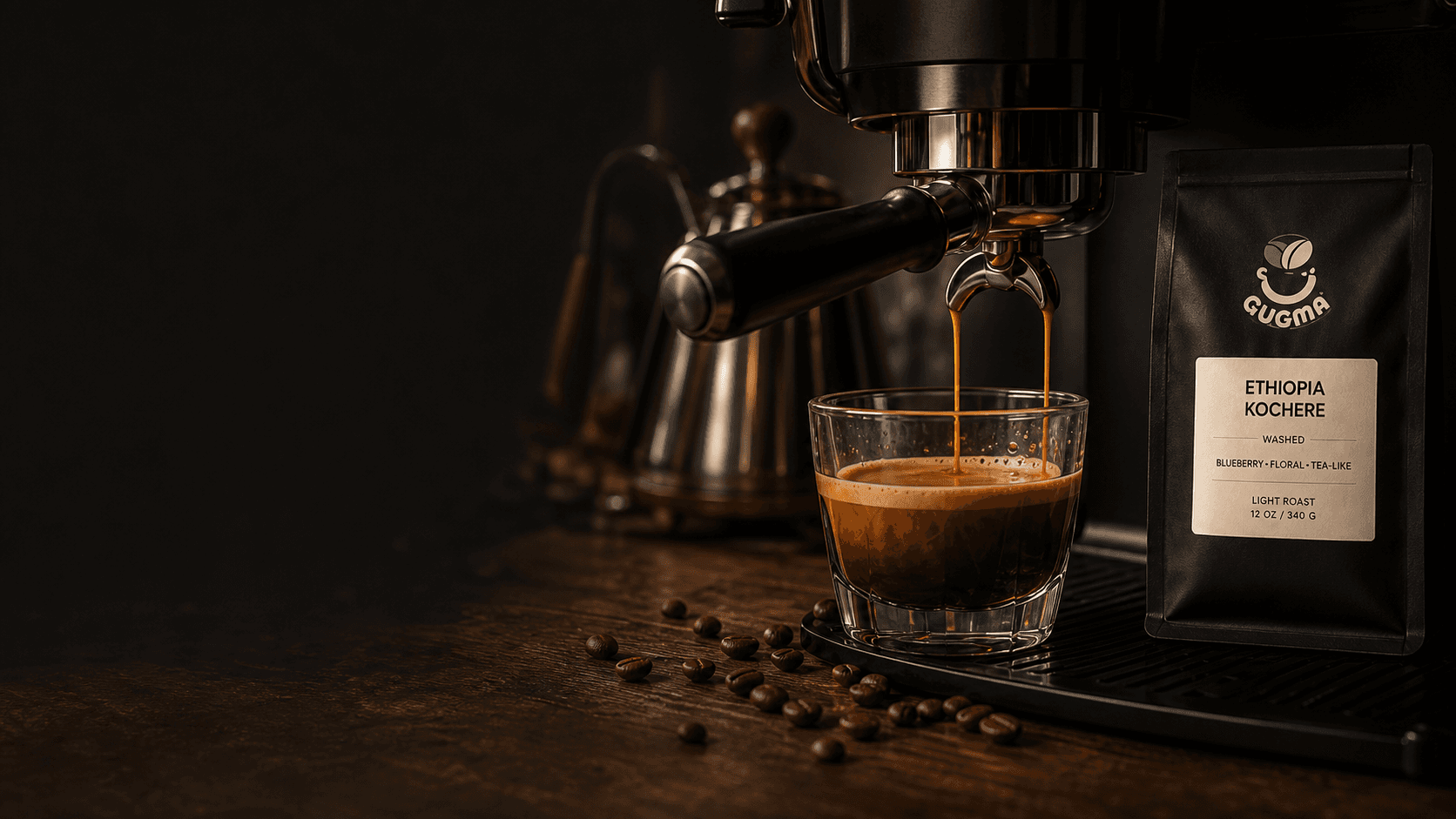
When a cup tastes wrong, the instinct is to change everything: more coffee, hotter water, a new ratio, a different pour. That usually makes the next cup harder to read. Start with the sensation you notice most, then make one small change that gives the next brew a purpose.
If the coffee tastes sharp, sour, or hollow, it may need more extraction. For a V60 or other filter brew, move the grind a little finer first. Keep the dose and water the same. For espresso, try a slightly finer grind or a small increase in yield, but not both at once. Taste the next cup before deciding the coffee is too acidic. A bright coffee can be pleasant; a hollow coffee usually feels like it has not found its sweetness yet.
If the coffee tastes dry, harsh, or tiring, pull back. For filter, grind a little coarser or reduce unnecessary agitation. For espresso, move coarser or stop the shot a little earlier. Dryness is not the same as a darker tasting note. It tends to sit on the tongue and make another sip less inviting. Your correction should make the cup easier to return to, not merely less intense.
If the coffee is thin or watery, first decide whether the flavour is pleasant but too quiet, or whether it is also underdeveloped. Pleasant but quiet usually points to strength: use a little more coffee while keeping the water amount steady. Thin and sour may point to extraction instead, so make the grind a little finer. Those are different problems, and treating them separately saves coffee.
If the coffee is heavy, muddy, or dull, look at both grind and clarity. A French press may need a coarser grind, a slower press, and a careful decant that leaves the last sediment behind. A filter brew may be stalling because the grind is too fine or the bed has been agitated too much. Give the water a cleaner path, then taste whether the cup becomes lighter without losing sweetness.
Sometimes a cup is sour and dry at the same time. That does not mean the coffee is impossible. Uneven particles, channeling in espresso, or an unsettled brew can send different parts of the coffee in different directions. In that moment, do not make a large extraction move. Improve the preparation first: distribute espresso more evenly, rinse and seat the filter well, use a steadier pour, and make sure the brewer is clean.
The fastest home coffee log has only four lines: coffee, recipe, taste, next move. Write something like: Ethiopia Dogo Sudo / 15g to 250g / floral but hollow / slightly finer. That record turns a frustrating cup into information. The next brew does not need to be perfect. It only needs to tell you whether your one change moved the cup in the right direction.
Gugma's Brew Lab gives a dependable starting recipe. This guide is what comes next: use the cup as evidence, change one variable, and let good coffee become easier to understand over time.