
Coffee rest after roasting: what the roast date can actually tell you
Coffee changes after roasting. Here is what rest and degassing mean at home, why espresso and filter may behave differently, and how to use the roast date without chasing a magic number.
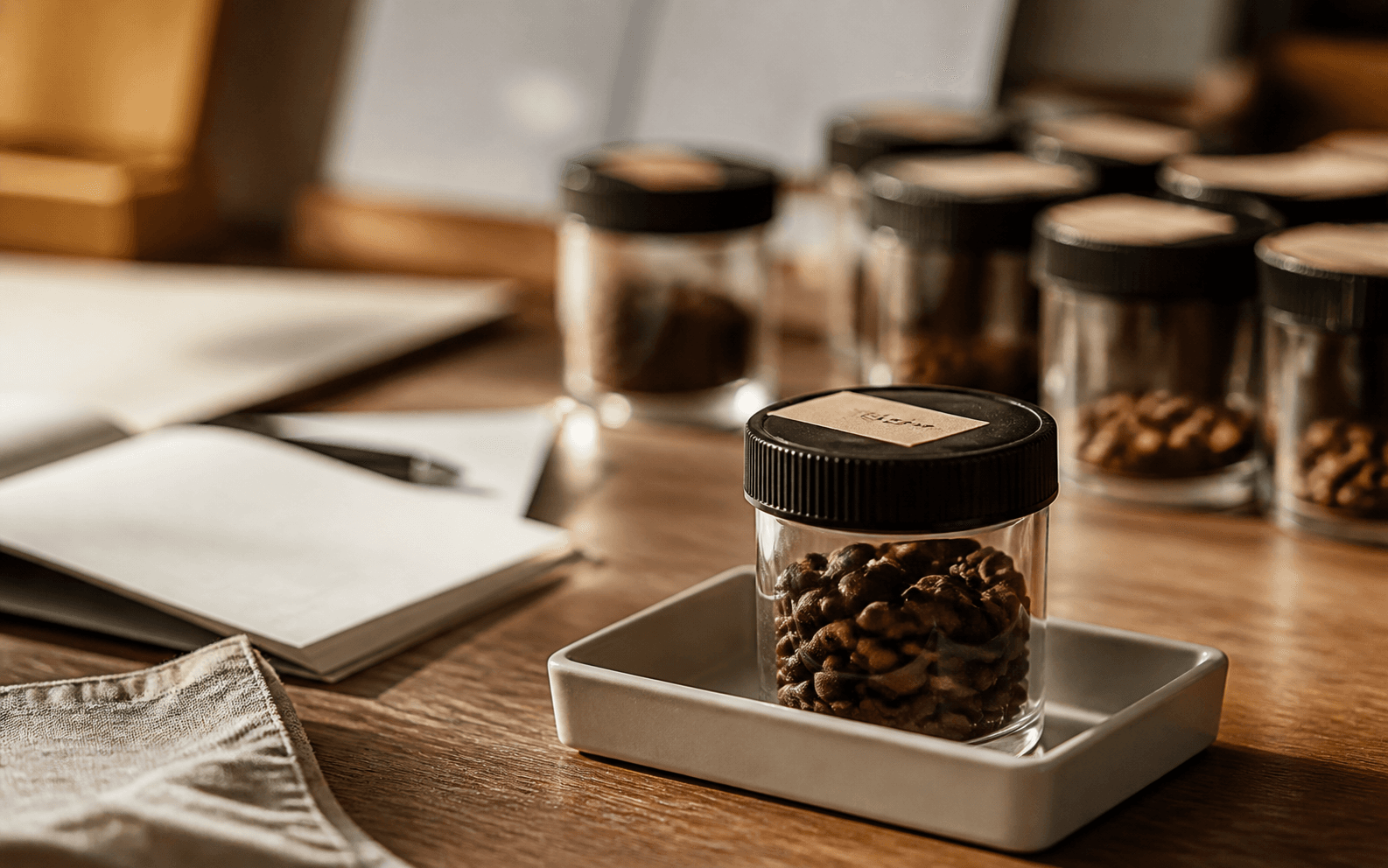
A roast date is useful because coffee does not stay still after roasting. The beans release carbon dioxide, aroma compounds gradually change, and the same recipe can behave differently from one week to the next. Rest is simply the period in which you give that change room to happen before deciding a coffee is not working.
Carbon dioxide is created during roasting and remains inside the porous structure of the bean. It begins leaving immediately. In a filter brew, you can see it as a more active bloom. In espresso, too much trapped gas can make water move unpredictably through the puck. This is why a bag that is very close to its roast date may need patience and a little more restraint at the grinder.
There is no single best rest time for every coffee. Roast level, roast development, processing, packaging, grinder, and brew method all change the answer. A lighter filter coffee may become more open over several days. An espresso may settle into a more predictable extraction later. Rather than treating a number of days as a rule, brew the coffee once, note what it is doing, then repeat the same recipe a few days later.
For filter brewing, start when the coffee arrives. Use a calm recipe and pay attention to bloom, drawdown, sweetness, and finish. If the cup tastes lively but a little tight, do not immediately chase it with a dramatic recipe. Keep the dose and water stable, make one small grind adjustment if needed, and taste it again after a short rest. That comparison tells you more than a date printed without context.
For espresso, consistency is the useful signal. If a very fresh bag runs unevenly, produces excessive crema, or asks for unusually coarse settings, give it more rest before rebuilding the whole dial-in. Once the shot begins to move in a calmer, more repeatable way, use dose, yield, and grind to tune the flavour. The goal is not to wait for perfection. It is to avoid blaming the coffee for a temporary change in behaviour.
Whole beans protect their aroma far better than ground coffee. Grind only what you need immediately, keep the bag closed after dosing, and store it somewhere cool, dry, and away from strong light. The freezer is a separate choice for longer storage, but daily coffee does not need a ritual. A good bag, a sensible cupboard, and a small repeatable routine are enough.
Gugma releases coffee to make the first cup clearer, not to hand you another timer to manage. Use the roast date as a starting clue. Then let the cup tell you whether it wants a little more rest, a finer grind, a shorter yield, or simply another morning. That is a better relationship with freshness: informed, but not anxious.