
Dialing in espresso without chasing numbers
A practical home espresso guide for dose, yield, grind, time, rest, and taste-driven adjustment.
Jump to recipe ↓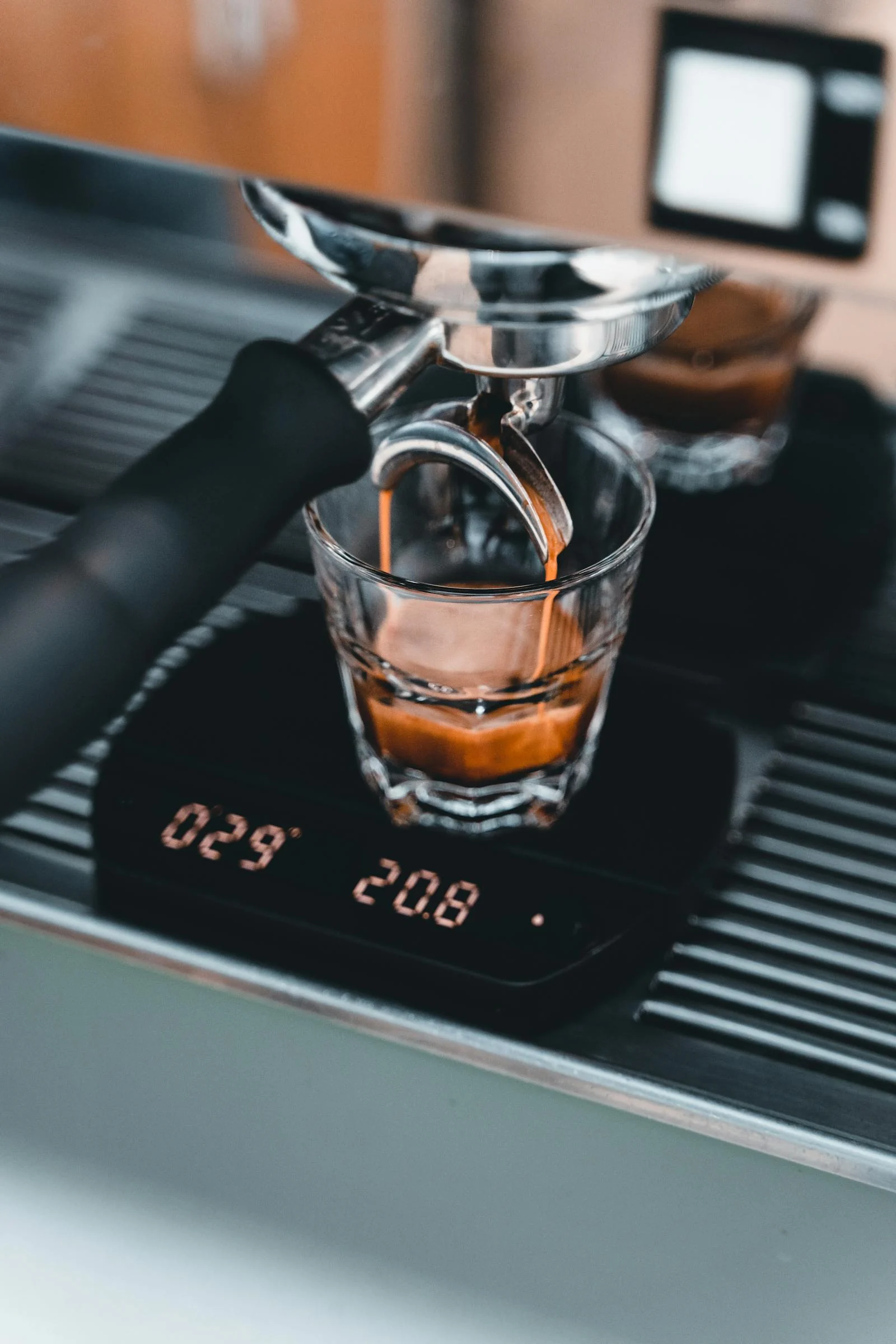
Dialing in espresso gets frustrating when every shot feels like a new problem. The fastest way to improve is to stop changing everything at once. Keep the dose stable, choose a reasonable yield, and let grind size do most of the work.
For a 58mm basket, start around 18g in and 36g out. For smaller baskets, use the dose that fits your basket cleanly without forcing the puck. Aim for a shot that lands in a normal espresso range, but do not worship the timer. Time helps you see what happened. Taste tells you whether it worked.
Before changing a grind setting, make the puck preparation boringly consistent. Distribute the coffee evenly, break up obvious clumps, tamp level, and lock the portafilter in without delay. You do not need elaborate tools to make better home espresso, but you do need the same preparation from shot to shot. Otherwise, a channeling problem can look exactly like a grind-size problem.
A sensible espresso ratio gives you a language for comparison. An 18g dose producing 36g in the cup is a 1:2 ratio. A shorter yield such as 18g in and 30g out can increase texture and concentration. A longer yield such as 18g in and 42g out can open up a coffee that tastes tight. Start at 1:2, then move only when the cup gives you a reason.
If the espresso is sharp, sour, or hollow, it is often under-extracted. Grind finer, or slightly increase yield if the shot is already running slowly. If the espresso is dry, harsh, or bitter, it may be over-extracted. Grind coarser, or shorten the yield slightly.
Milk drinks need a small change in judgment. A shot that tastes intense on its own can become balanced once milk is added. For cappuccino or flat white, look for sweetness, body, and a finish that does not disappear. If a straight shot is bright but pleasant, try it with milk before changing the recipe. Espresso dial-in is about the drink you are actually making, not a theoretical perfect extraction.
Freshly roasted coffee also changes across the first week. A coffee that tastes tight on day three may become sweeter on day six. That is why Gugma cares about rest, tasting, and release timing. The bag should reach you with a clear starting path, not a mystery.
When the grinder changes, make small moves. One marked click, or a very short turn of a stepless collar, is enough to learn from. Purge a little retained coffee if your grinder holds it. Then pull the next shot and compare it with the last one. Large changes make it hard to know what solved the problem; small changes teach you how your machine and coffee behave together.
When you get close, stop making big moves. Keep notes short: dose, yield, time, taste, next adjustment. The best home espresso is built by repeating a simple process until the cup becomes predictable.